WALL
קיר
16.7.11
Zvika Kantor
Zvika Kantor
Orit Hofshi | Itamar Beglikter | Dan Birenboim | Amit Magal
Yehudit Matzkel | Ayelet Siton | Zvika Kantor
Curator: Varda Genosar
ABOUT
אודות
A wall — like a partition, barrier, or fence — often serves as a historical marker, a testimony to the past or the present, laden with notions of territory, boundary-setting, and warning. It can rise up as a barrier, signaling the presence of a border — between one house and another, between one country and its neighbor. In a reality of dense populations, a wall within living spaces divides them into smaller units, serving as a partition that allows for the creation of intimate space.
On the other hand, in urban settings, walls serve as platforms for street art, which is increasingly becoming institutionalized, thanks to "walls" appropriated by "underground painters" making use of freedom of expression and anonymity. Here, the wall is a canvas — a place where social commentary is amplified in the public space, as well as in art exhibition spaces, where the wall becomes a sort of small sanctuary for the individual.
In the new culture emerging through social media, the concept of a "wall" has turned into a site and an action — representing the self and inviting others to intervene, respond, and warn, in transparency and shared messaging. It is a platform that generates a reality of its own and, as experience has shown, demonstrates the power and potential of individuals organizing together.
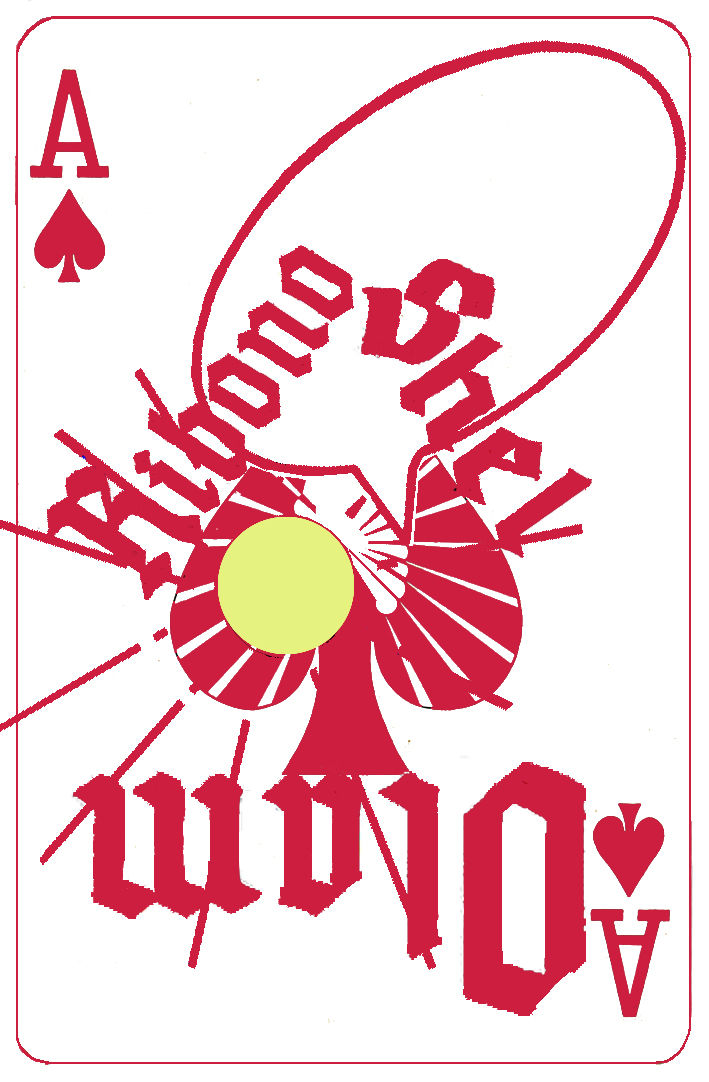
Zvika Kantor, one of the veteran artists, presents the work Winning Card. In Gothic script associated with Christian culture, the Hebrew phrase "Master of the Universe" is written. It is a kind of refined, intellectual graffiti that, through inversion, creates both a defiant statement in front of a "sealed wall" and a cry of wonder, amazement, or a type of prayer facing a "prayer wall." It is a winning card, in a sarcasm that sharpens a message that faces both ways.
Orit Hofshi presents a surviving wall from the synagogue in Holesov, the hometown of her parents in the Czech Republic, which was destroyed in 1944. Wooden boards used for printing serve as remnants, a symbol seeking to memorialize the suffering — or, in the artist’s words, “a historical thread of a community thousands of years old, of which we are still a link” (interview, in her exhibition catalog at the Tefen Museum).
Ruins of Jewish and other houses of worship forever mark the narrowness of vision and the futility of religious wars.
At times, wooden walls of synagogues abroad were brought in their entirety to be preserved in museums, each wall carrying memory and emotional and historical weight, both personal and national.
Ayelet Siton touches in her sculptural works, Holy Cow and Red Cow, on symbols that by their mere presence create an act of separation and boundary-setting. Animals that have become concepts serve as warnings about the existence of barriers between social groups, or between sacred and profane domains.
In one cultural context, the representation may be meaningless; in another, it is a powerful symbol. The Holy Cow is indeed sacred (in India), and the Red Cow — the unique sacrificial animal of the ancient Temple — remains as a symbol marked at the "wall" standing in collective memory as testimony.
Turning the concept into a demonic object hints at the broader cultural critique involved.
Itamar Balgiktar reclaims the very materials used for building walls, transferring them from the realm of construction into the realm of art. Ytong blocks and tar are manually transformed into objects representing the aesthetics of the material itself.
A stone basin reminiscent of a baptismal font or a military washing facility expresses the relationship between the "low" and the "high" in formal language. Tar-coated ornamental vessels connect the concept of beauty with a time and place linked to the pioneering history of the land — simplicity, labor, building — as in Alterman's poem about the "concrete cloak."
Dan Birnbaum also connects with materials related to the idea of the wall. He uses industrially decorated wallpaper, upon which he paints.
Wallpaper — a decorative "covering" for a wall, resembling a European-style ornamental gown — was also adopted in Israel. The wallpaper seeks to lift the wall from its dullness, giving it a refined, intimate character.
In Birnbaum’s work, the wallpaper becomes a canvas, blending industrial and personal expressions.
Amit Magal captures, through his camera, the wall as a reflection of a familiar, local contemporary reality — urban settings in remote areas or distant environments linked to military contexts. In both cases, the wall serves as a mirror of reality.
Shadows of soldiers' figures are used by the artist as a subtle, cautious statement; the shadows on the wall are a kind of writing, a dark theater, perhaps even an absurd one — especially against the backdrop of the bright blue sky, hinting at a different, hoped-for reality.
A wall is a wall — but it also becomes a surface for messages engraved upon it through meaningful images.
Yehudit Matzkel memorializes in her work the facade of a Templar building, standing as a historic asset and echoing the memory of events associated with the Templar movement, both ancient and modern.
Abandoned sinks on a solitary wall form a kind of monument, as does the grand, desolate stone wall of the building itself.
Beside them, partitions built from "cheap" materials like plastic and metal pipes become makeshift enclosures, channeling movement from one point to another, from one wing to a distant one — leaving viewers pondering what might lie beyond the partition, what is hidden behind the wall.
*auto-translate


